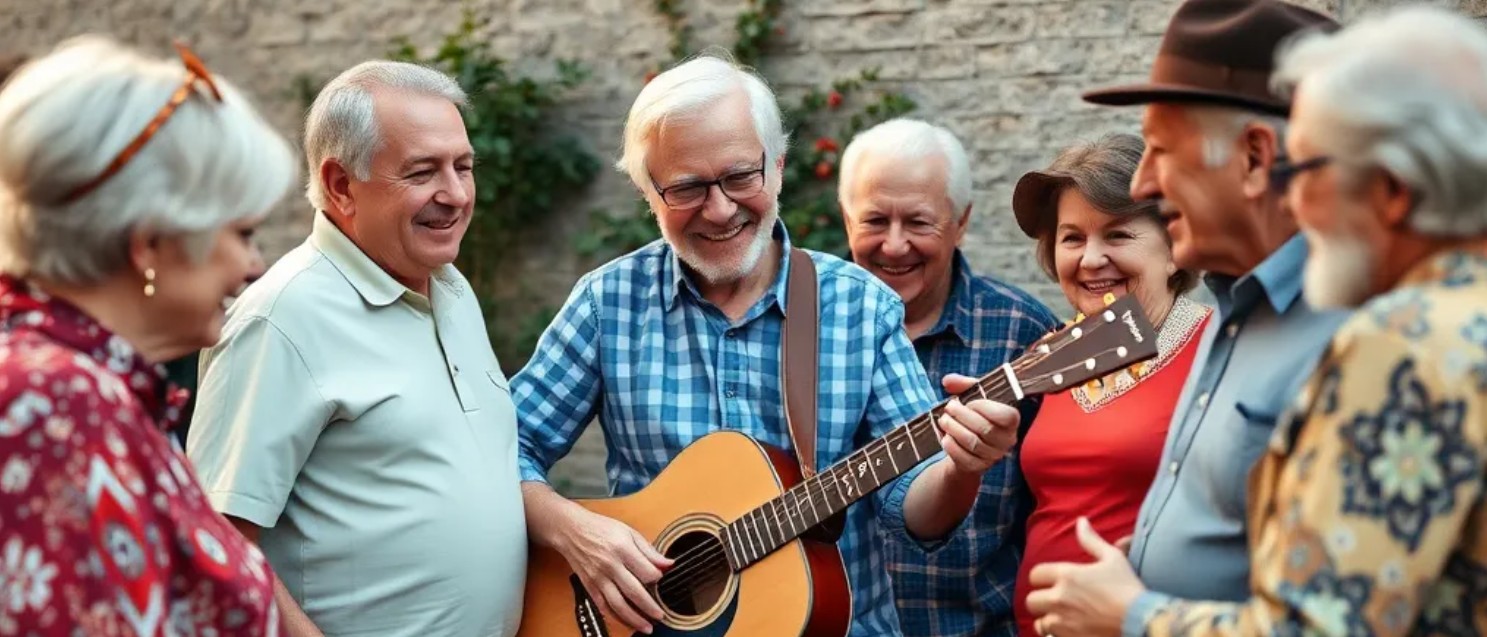

One of the most rewarding aspects of caring for residents with cognitive impairment is forming a meaningful connection with them—moments when they are fully present and able to appreciate simply being. These experiences are especially powerful when music is used as a therapeutic tool to foster engagement, comfort, and connection.
Music has a strong effect on human emotion and can be especially meaningful for people living with dementia. As part of a comprehensive, non-drug care plan, music therapy can provide a range of unique therapeutic benefits.
When used for recreation, music brings much joy to most dementia patients. Those in the early- and mid-stages of dementia can fully appreciate musical performances and truly enjoy listening to their favorite songs. Late-stage patients enjoy tapping to the beat and singing along with the songs they still recognize, even after having progressed to the point of being no longer able to recognize familiar faces.
Some melodies are associated with past events and can evoke fond memories and feelings. Listening to music can be fun and emotional. But far beyond its entertainment value, there is growing evidence that listening to music can also be a powerful therapeutic tool!
For centuries, music has been known to have a calming effect on the listener, providing relief from stress and anxiety. New brain-scanning technology has given neuroscientists a renewed interest in discovering how music affects our neural circuits.
Researchers in Finland using functional magnetic resonance imaging (fMRI) found that listening to music engages not only the auditory areas of the brain but also employs large-scale neural networks. For instance, they discovered that the processing of musical rhythms recruits motor areas in the brain, supporting the idea that music and movement are closely intertwined.
Limbic areas of the brain, known to be associated with emotions, were found to be involved in the processing of rhythm and tonality. Processing timbre was found to activate the default mode network, which is a specific set of brain regions that engage when individuals are left to think to themselves undisturbed, and is associated with mind-wandering and creativity. The findings suggest that music can help the brain better organize incoming information.
By engaging areas responsible for attention, prediction, and memory organization, music essentially stimulates activity throughout the entire brain.
Beyond its cognitive impact, music makes us feel good. Recent research shows that listening to music triggers the release of dopamine—a neurotransmitter that sends pleasure signals throughout the body.
In memory care settings, this widespread neural stimulation helps patients maintain higher levels of physical, cognitive, social, and emotional functioning. This rich sensory and intellectual engagement can preserve, or even significantly enhance, their overall quality of life.
Furthermore, participating in live music programs or music-making activities helps patients overcome isolation, which is often associated with dementia. Key benefits include:
• Improved memory
• Positive changes in overall mood and emotional state
• Non-pharmacological management of pain and discomfort
• Stimulation, preventing apathy
• Promotion of rhythmic, controlled movement
• Improved communication skills and vocal fluency
• Social interaction
• Calming and stress reduction
While listening and moving to music in general is both stimulating and enjoyable, a certified music therapist can create programs to ensure each patient receives the maximum therapeutic benefit. These professionals are specifically trained to use music to target certain brain regions, personalizing programs to reach individual goals such as enhancing memory, language skills, and motor coordination.
Music therapy can also promote overall wellness by increasing patients’ motivation to become engaged in their treatment, and providing a safe outlet for the expression of feelings.
Daycare centers and care homes that specialize in memory care routinely incorporate a music therapy program into the schedule as a way of keeping patients in the later stages of dementia engaged and stimulated. These programs are often made available to the general community and include interactive workshops where participants can follow the beat with hand-held instruments, sing along, or request playlists of old favorites. Families caring for their loved ones at home should check local resources for opportunities to attend music therapy programs.
The Friendship Center in Santa Barbara offers an excellent day program that includes several music workshops, including live music and interactive, engaging performances. This is a great opportunity to support brain health for the patients in a fun, social environment, while providing respite for their caregivers and loved ones.
In addition to attending music therapy sessions, patients benefit from the use of music at home as well. Caregivers can use music to enhance wellbeing and promote care in several ways, such as:
• When verbal communication fails, playing familiar songs can be soothing and helps take the edge off difficult moments.
• Playing soft, background music can help create a calm environment and ease anxiety, particularly during meals, or at bath time, when a relaxed atmosphere is needed most.
• Playing animated, happy songs in the morning can help get your loved one started for the day.
• Singing a familiar song together can offer a welcome distraction and help a person out of a repetitive, compulsive act or behavior.
Think ahead: Create playlists of different kinds of songs for different kinds of moods, and take into consideration that music preferences are highly personal. Make sure the songs you select are familiar and dear to your loved one with dementia, and won’t bring up sad memories related to past events. In the movie Casablanca, Humphrey Bogart became upset every time he heard As Time Goes By. Similarly, a poor choice of songs can evoke negative instead of positive feelings. The Casablanca Effect could be devastating.